

Short answer: yes — stainless steel is one of the most recyclable metals out there, and it’s also one of the more valuable ones to scrap. If you’ve got an old sink, appliance, benchtop, or offcuts from a job sitting around, here’s what you need to know before you take it in.
Is Stainless Steel Actually Worth Scrapping?
Yes, and it’s worth more than standard steel. Stainless steel is an alloy made mostly of iron, chromium, and nickel — and it’s the chromium and nickel content that makes it more valuable than regular ferrous steel. The higher the grade, the more these elements it contains, and the more it’s worth per kilo.
That’s why stainless steel scrap sits in the “medium-high” value bracket at most scrap yards — above standard ferrous steel and aluminium, though usually below copper and brass.
What Types of Stainless Steel Can Be Scrapped?
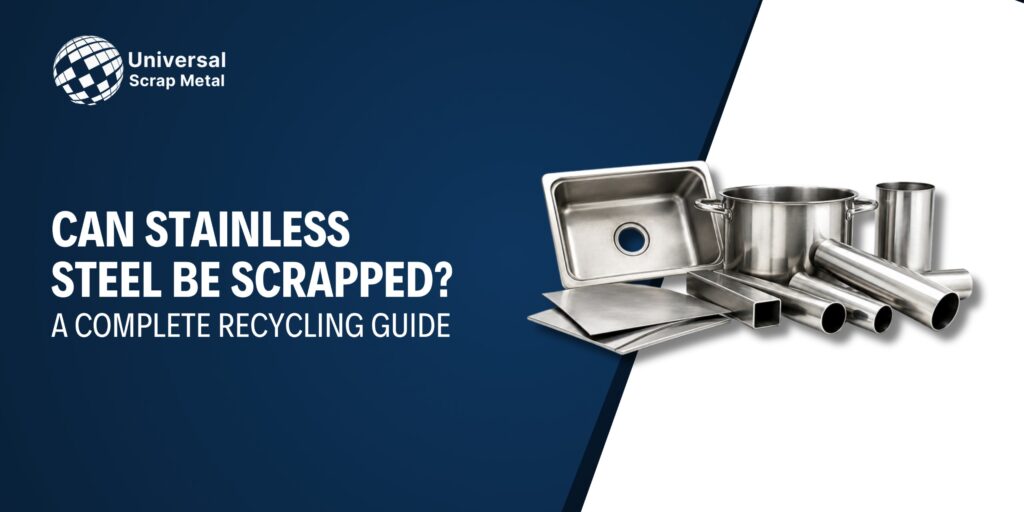
Almost any stainless steel item can be recycled, including:
- Kitchen appliances — fridges, ovens, dishwashers
- Sinks and benchtops — household and commercial
- Piping and tubing — from plumbing or industrial jobs
- Tanks and vats — common in food, wine, and manufacturing industries
- Offcuts and sheet metal — from fabrication or renovation work
- Cutlery, cookware, and fittings — smaller household items
Even rusted or damaged stainless steel is still recyclable — surface rust doesn’t remove the value of the metal underneath.
Does the Grade of Stainless Steel Matter?
Yes. Not all stainless steel is priced the same. Two grades make up most household and commercial scrap:
| Grade | Composition | Common Use |
|---|---|---|
| 304 | ~18% chromium, ~8% nickel | Kitchen appliances, sinks, most household items |
| 316 | Higher nickel + molybdenum | Marine equipment, medical, industrial tanks |
316-grade generally scraps for more than 304 because of its higher nickel content — but unless it’s clearly marked, most scrap yards will assess and grade it for you on-site rather than expecting you to know the spec.
How to Prepare Stainless Steel for Scrapping
A little prep goes a long way toward a better payout — the same sorting and cleaning principles apply to stainless as they do to any metal you’re selling:
- Separate it from other metals. Stainless steel mixed in with regular steel, aluminium, or plastic components usually gets valued at a lower blended rate.
- Remove non-metal attachments. Plastic handles, rubber seals, or glass (like an oven door) should be stripped off where possible.
- Keep large items intact if you can. Big tanks or appliances don’t need to be broken down — yards can weigh and process them as-is.
- Bring proof for large commercial loads. If you’re dropping off tanks or bulk industrial stainless from a business, some yards may ask for basic details on the source.
Where to Scrap Stainless Steel in Perth
Universal Scrap Metal, based in Cannington, accepts stainless steel from households, tradies, and businesses across Perth suburbs including Bentley, Canning Vale, Kewdale, Lynwood, Parkwood, and Gosnells. What that looks like in practice:
- Same-day cash payout after weighing
- Live market pricing, so the rate reflects current stainless steel demand
- No minimum load size — a single sink or a full ute-load of tanks, both accepted
- No middlemen, so more of the value goes directly to you
Businesses generating stainless steel scrap regularly — commercial kitchens, fabricators, food and beverage manufacturers — can also set up an ongoing collection arrangement for warehouses and factories instead of individual drop-offs.
Final Thoughts
Stainless steel isn’t just recyclable — it’s one of the better-paying metals to scrap, thanks to its chromium and nickel content. Whether it’s a single kitchen appliance or a commercial tank clear-out, separating it from other materials and taking it to a local buyer is the simplest way to turn it into cash instead of landfill.
FAQs
- Can rusted or damaged stainless steel still be scrapped?
Yes. Surface rust or dents don’t affect the underlying metal value — it’s still accepted and paid for the same as clean stainless steel. - Is stainless steel worth more than regular steel?
Yes. Its chromium and nickel content makes it more valuable per kilo than standard ferrous steel. - Does the grade of stainless steel affect the price?
Yes. Higher-nickel grades like 316 generally scrap for more than common grades like 304, though most yards will assess and grade unmarked items on-site. - Do I need to remove plastic or rubber parts before scrapping?
It helps. Stripping off non-metal attachments like handles or seals usually gets you a cleaner, better-valued load. - Can businesses drop off large stainless steel items like tanks?
Yes. Tanks, vats, and other large commercial items are accepted, and regular commercial suppliers can arrange ongoing collection.
Drop off your stainless steel at Universal Scrap Metal, 46 Hogarth Street, Cannington — or get in touch via WhatsApp for a quick quote.