

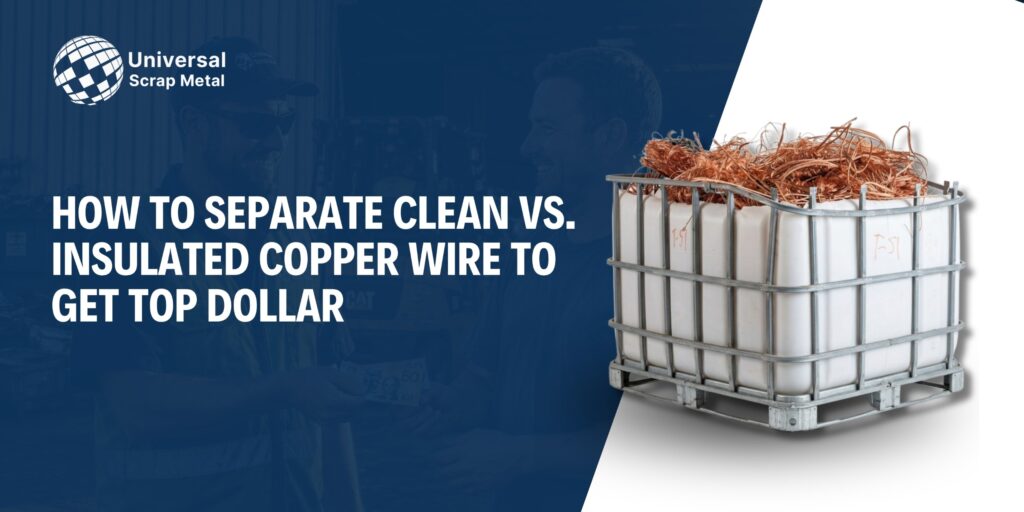
If you have ever stepped into a Perth scrap metal yard with a tangled box of mixed wiring, you might have been disappointed by the final payout. Copper is widely known as the “king of scrap metal,” but not all copper is valued equally.
At Universal Scrap Metal in Cannington, one of the most common mistakes we see people make is dropping off a mixed load of clean and insulated copper wire. By taking just a little time to understand the differences and separating your haul beforehand, you can drastically increase your earnings.
Here is exactly how to identify, separate, and prepare your copper wire to ensure you walk away with top dollar.
Understanding the Two Main Categories: Clean vs. Insulated
To maximize your profit, you first need to understand how scrap yards categorize and price copper wiring.
1. Clean Copper (often referred to as Millberry or No. 1 Copper):
This is the holy grail of scrap. It consists of clean, unalloyed, uncoated copper wire scrap or cable that is completely free of insulation, solder, paint, or heavy corrosion. It must be thicker than a pencil lead (typically 16 gauge or larger) and look like shiny, bare metal. Because it requires zero processing to melt down, it commands the absolute highest live-market price.
2. Insulated Copper Wire:
This is any copper wire scrap that is still wrapped in its plastic, rubber, or PVC protective coating. Scrap yards buy this at a lower rate per kilo because they have to factor in the weight of the plastic (which is waste) and the cost of operating heavy-duty industrial wire strippers to get to the metal inside.
Copper Grades and What They Mean for Your Payout
Scrap yards don’t pay a flat rate for all copper. They grade it, and each grade carries a different price per kilogram:
| Grade | Description | Value |
| Bare bright copper | Clean, stripped, shiny — no coatings or solder | Highest |
| #1 copper | Clean pipe or heavy wire, minimal oxidisation | High |
| #2 copper | Oxidised, painted, or lightly contaminated | Mid |
| Insulated copper wire | Intact plastic or rubber coating | Lower |
| Light gauge insulated | Thin wire, low copper-to-insulation ratio | Lowest |
The critical point: mixing grades in one load means the buyer prices everything at the lowest grade present. Separating your copper — even roughly — ensures each type is paid correctly.
Step-by-Step: How to Strip Insulated Copper Wire
Stripping insulation converts lower-grade wire into bare bright copper, unlocking a higher payout. Here’s how to do it properly.
Step 1 — Assess if it’s worth stripping. Stripping makes financial sense on thick gauge wire (6mm² or larger) and when you have a reasonable volume. Skip it on very thin wires like phone charger cables — the copper content is too minimal to justify the effort.
Step 2 — Use the right tool. A dedicated wire stripper from any hardware store is all you need. Choose one with an adjustable gauge setting. Never use a knife dragged along the wire — it risks nicking the copper, reducing its grade, and is a safety hazard.
Step 3 — Strip cleanly and consistently. Set the stripper to the correct gauge, clamp it around the wire, and draw it firmly along the cable. Cut your cables into 30–50cm sections first to make the process faster and more manageable.
Step 4 — Keep them separated. As you work, place bare copper and the remaining insulated wire in separate containers. Don’t mix them back together.
Never burn insulation off wire — it is illegal in Australia, produces toxic fumes, and leaves carbon residue that significantly downgrades the copper.
Tips to Maximise Your Payout at the Yard
A little preparation before you arrive makes a real difference:
- Sort into clearly separated loads. Use labelled buckets or bags for each grade — bare bright, insulated, and any other metals kept apart.
- Remove non-copper attachments. Strip off brass fittings, plastic connectors, and aluminium brackets before weighing. These add weight but lower the grade.
- Clean oxidised copper where possible. A dark or greenish tinge drops copper to #2 grade. Lightly oxidised copper can often be restored with a wire brush.
- Call ahead for large loads. If you’re bringing in significant volume, letting the yard know in advance allows them to prepare and process your load efficiently.
At Universal Scrap Metal in Cannington, we accept all copper grades, pay live market rates with no hidden fees, and hand over cash immediately after weighing.
Frequently Asked Questions
- Do I have to strip my copper wire before bringing it in?
No — insulated copper is accepted as-is at the insulated grade. Stripping is optional, but it increases your return on thicker cables. Our team can advise on what’s worthwhile for your load. - How do I know if my copper qualifies as bare bright?
Bright copper must be clean, shiny, and free from coatings, solder, paint, and oxidation. Any discoloration grades it as #1 or #2 copper. Bring it in, and we’ll assess it honestly on the spot. - Can I bring mixed metals in with my copper?
Always keep metals separated. Mixing copper, brass, and aluminium defaults the entire load to the lowest-value metal present. A few minutes of sorting at home translates directly into a better payout. - Is very thin copper wire worth recycling?
Yes — still accepted, though the return reflects the low copper content. If you’re already making a trip, bring it along. Every kilogram counts. - How does Universal Scrap Metal weigh and price copper?
We use calibrated scales and live market pricing with no hidden deductions. You see the weight, you’re told the rate, and you receive cash on the spot. Open 365 days at 46 Hogarth Street, Cannington, WA — walk-ins welcome.
Don’t leave money on the table. Bring your scrap to Universal Scrap Metal at 46 Hogarth Street, Cannington — open 365 days, cash paid on the spot